
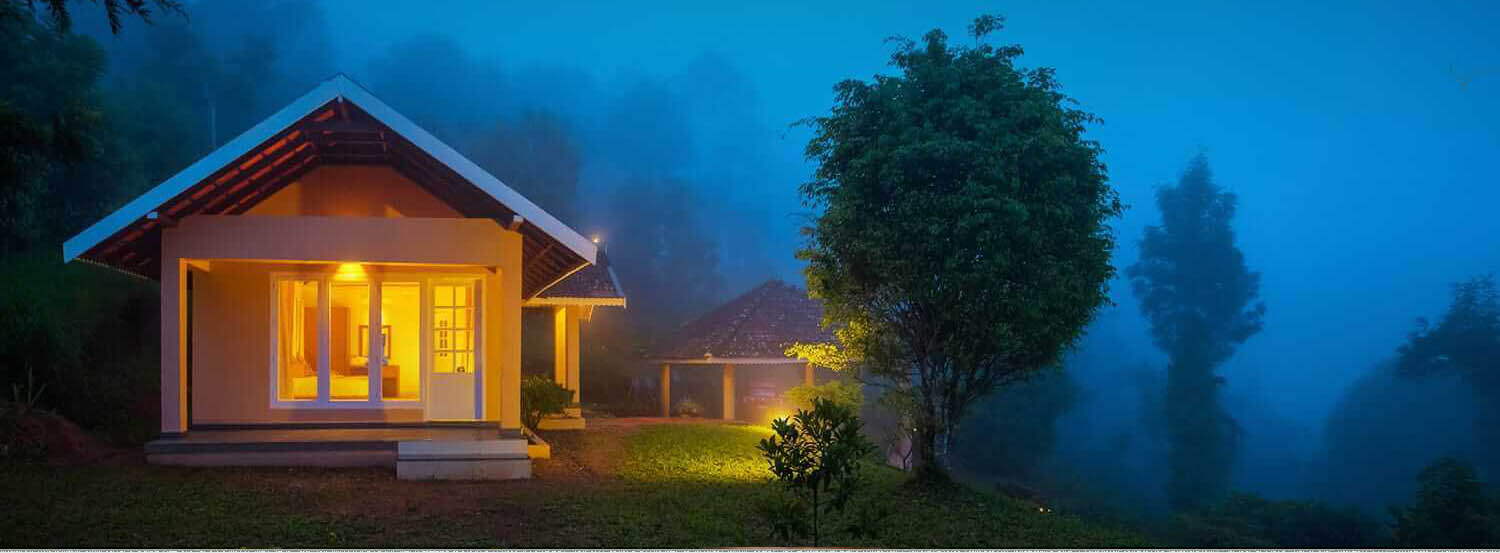

Accommodation in Wayanad

Stay with us
-
Kah:wah

Ever dreamt of waking up to the sound of birds, just to discover a beautiful sunrise between the…
-
Pimienta

A fine mix of elegance and tranquility, Pimienta villas offer large verandahs, exclusive private…
-
Lilikoi

Set on a slope overlooking the Mundakai and Vellarimala mountains of the western ghats…
-
Kokum

Located besides coffee, pepper and kokum plantations, kokum villas overlook the Nilgiri…
Faq
After The Rains offers four categories of villas, each named after local flora — Kah:wah, Pimienta, and Kokum, among others. Each villa is thoughtfully designed with natural materials and a fine balance of understated luxury and nature, built to integrate with the surrounding spice garden landscape.
Yes. The Kah:wah villa features an exclusive private garden in addition to its spacious living area. The broader rainforest and mountain views are best experienced from the resort's open common spaces, designed for full immersion in the Wayanad landscape.
Yes. The intimate scale of the property, seclusion of the villas within a working spice garden, candlelit dining at Ahua, and the natural drama of the Wayanad rainforest make After The Rains one of the most sought-after romantic retreats in Kerala.
Yes. Please contact the team at reservations@aftertherains.in or +91 70220 13181 to confirm villa options and child-friendly arrangements before booking.
Standard check-in is at 2:00 PM and check-out is at 12:00 PM. Early check-in and late check-out may be arranged subject to availability — email reservations@aftertherains.in to request.
Please confirm meal inclusions at the time of booking by contacting reservations@aftertherains.in or calling +91 70220 13181.